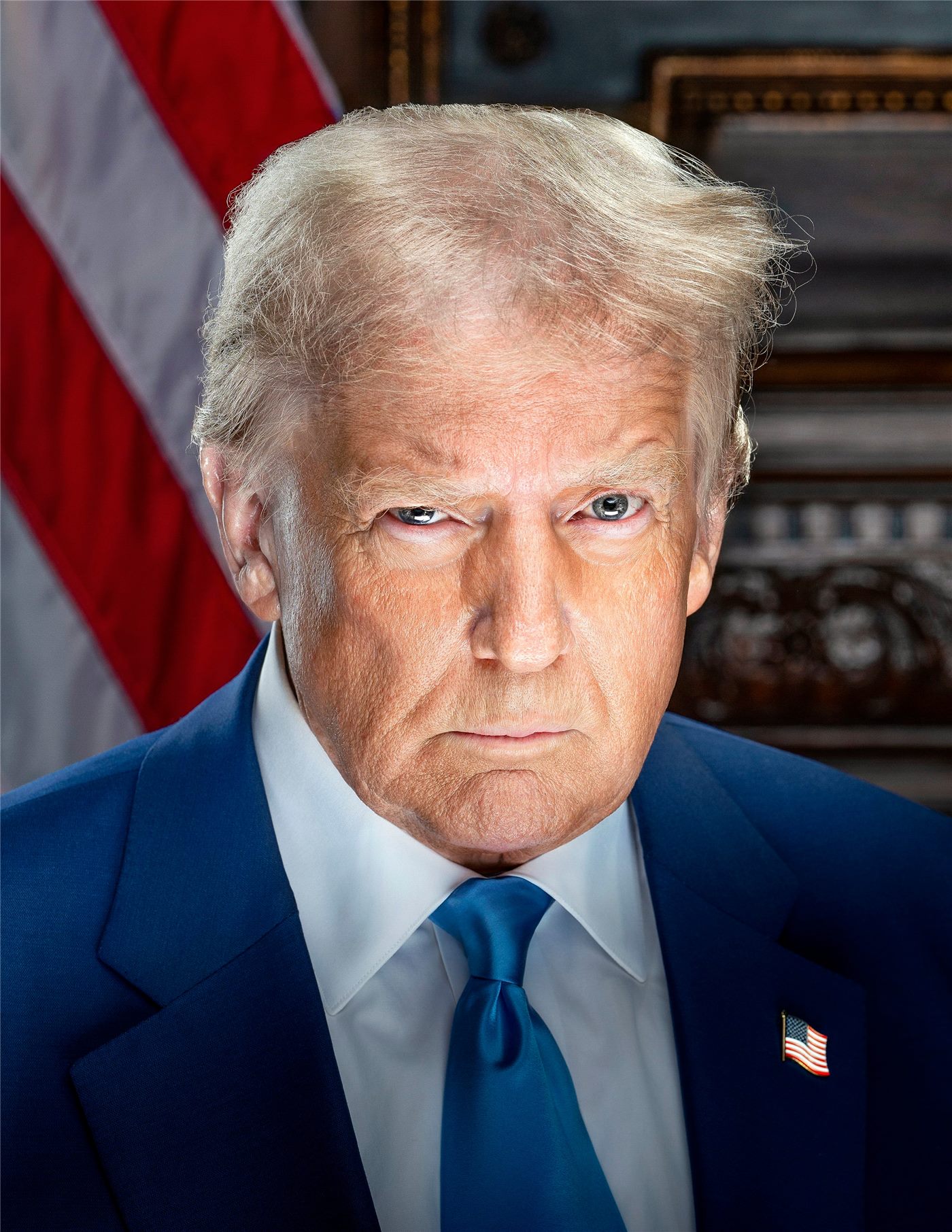
U.S. President Donald Trump said on Nov. 16 (local time), as he set off for the Philippines and China, that he could meet North Korean leader Kim Jong Un during the APEC summit in Shenzhen. The first-ever U.S.-China-Russia leaders’ meeting is set for Shenzhen on Nov. 19, and Trump said denuclearization, Iran and Ukraine would be discussed. The Kremlin expects a joint statement, while China’s Foreign Ministry called the meeting pioneering.
According to Kyunghyang Shinmun and the Korea Economic Daily, Trump told reporters before leaving the White House on Nov. 16 that he would meet Chinese President Xi Jinping and Russian President Vladimir Putin in China, and that a meeting with Kim was also possible. Asked where, he replied ‘in China,’ adding that Kim could come to China and ‘that’s up to President Xi.’ He said he hoped it would happen and that the trip offered a chance for major results.
광고 문의 · 300×250Taiwan’s Central News Agency, citing AFP, reported that Trump raised the possibility of Xi inviting Kim to the Shenzhen APEC. The Liberty Times noted that a meeting would be the first U.S.-North Korea leaders’ contact of Trump’s second term. But according to CNA, a senior U.S. official drew a line, saying there are currently no plans at all to engage with North Korea.
The schedule is tight. According to CNA, Trump attends the Quad (U.S., Japan, Australia, India) summit and a special U.S.-ASEAN summit in Manila on Nov. 17, meets Philippine President Ferdinand Marcos on Nov. 18 and moves to Shenzhen that afternoon. On Nov. 19 he attends the APEC plenary, holds bilateral talks with Xi at the Qilin Villa and then joins Xi and Putin for a three-way meeting. Secretary of State Marco Rubio, Treasury Secretary Scott Bessent, Commerce Secretary Howard Lutnick and Trade Representative Jamieson Greer are traveling with him.
A first U.S.-China-Russia meeting: denuclearization, Iran, Ukraine
According to the Liberty Times and CNA, Trump said the three-way meeting would cover denuclearization, Iran, Ukraine and economic and trade issues. On denuclearization, he acknowledged that it is very hard for any side to say it will give up nuclear weapons; on Iran, he said the situation is well under control; and he called Ukraine his favorite subject. A senior U.S. official said nuclear arms control and proliferation would be on the agenda but that no agreement is expected.
According to the Chosun Ilbo and Yonhap, Kremlin aide Yuri Ushakov said on Nov. 16 that a joint statement is expected after the meeting, that intensive consultations on the text are under way and that Russia has already passed its views to China. He said the meeting would recall the three countries’ wartime alliance and their cooperation in founding the United Nations. Putin and Xi will meet over a working breakfast on Nov. 18 to discuss Ukraine and the Korean Peninsula among other issues, and a Trump-Putin meeting is being arranged for Nov. 19, with Ushakov insisting the two will definitely meet.
According to Global Times online and other Chinese media, Foreign Ministry spokesperson Mao Ning told a regular briefing on Nov. 16 that this will be the first face-to-face meeting in history of the leaders of China, Russia and the United States and that it carries pioneering significance. She noted that all three are founding members of the United Nations and permanent members of the Security Council, and said they would exchange views in depth on safeguarding world peace and the strategic stability of major-power relations. On separate bilateral meetings during APEC, she said she had no information to offer at present.
Embers of U.S.-North Korea talks and a test for Seoul
According to Voice of America, Trump and Kim have met three times: at summits in Singapore in 2018 and Hanoi in 2019, and at Panmunjom in June 2019. Trump has wavered on the subject, saying ‘it could happen’ on Oct. 12 and that he knew nothing a week later. North Korea has not yet responded officially to his latest remarks.
Seoul is treading carefully. According to the Financial News, National Security Adviser Wi Sung-lac said at a Nov. 12 briefing that U.S.-North Korea contact during the summits is unlikely overall but cannot be ruled out, that Seoul is communicating with Washington, and that it is in touch with the countries concerned because the peninsula could come up at the three-way meeting. President Lee Jae-myung, who left on Nov. 16, plans to present his vision of peaceful coexistence on the peninsula at the East Asia Summit in Manila and seek support for resuming inter-Korean and U.S.-North Korea dialogue, while Etoday called the trip, with no confirmed one-on-one talks with any of the three leaders, a test of pragmatic diplomacy.
A Third View
South Korean and Chinese perspectives diverge sharply. Kyunghyang Shinmun sees the three-way meeting as a symbolic scene of weakening U.S. hegemony and says Korea’s pragmatic diplomacy, which must protect national interests among the great powers, faces a dilemma. China’s Foreign Ministry, by contrast, frames it as a pioneering meeting for world peace and strategic stability among major powers, while saying little on sensitive questions such as whether Kim will be invited.
Russia invokes the spirit of the wartime Allies to promote a picture of three powers steering the international order together, and says Putin’s attendance at next month’s G20 in Miami will largely depend on the outcome. The Liberty Times reported that Europe and Ukraine fear a new Yalta that redraws spheres of influence at Ukraine’s expense, and cited a Financial Times analysis that even a new big three of the U.S., China and Russia no longer has the power to run the world. In Japan’s case, an NHK reporter asked at the Chinese briefing about China’s bilateral meetings with countries such as Russia and Japan, and Beijing said only that it had no information, reflecting interest in where Japan stands in a three-power picture.