The Wall Street Journal reported that the Trump administration pushed for a U.S.-North Korea summit until late in the president’s Asia trip, considering a declaration ending the Korean War and a statement that would not demand denuclearization. The meeting fell through over conditions set by Kim Jong Un’s side, further complicating the Lee Jae-myung government’s bid to restore inter-Korean ties while seeking wartime operational control and nuclear-powered submarines.
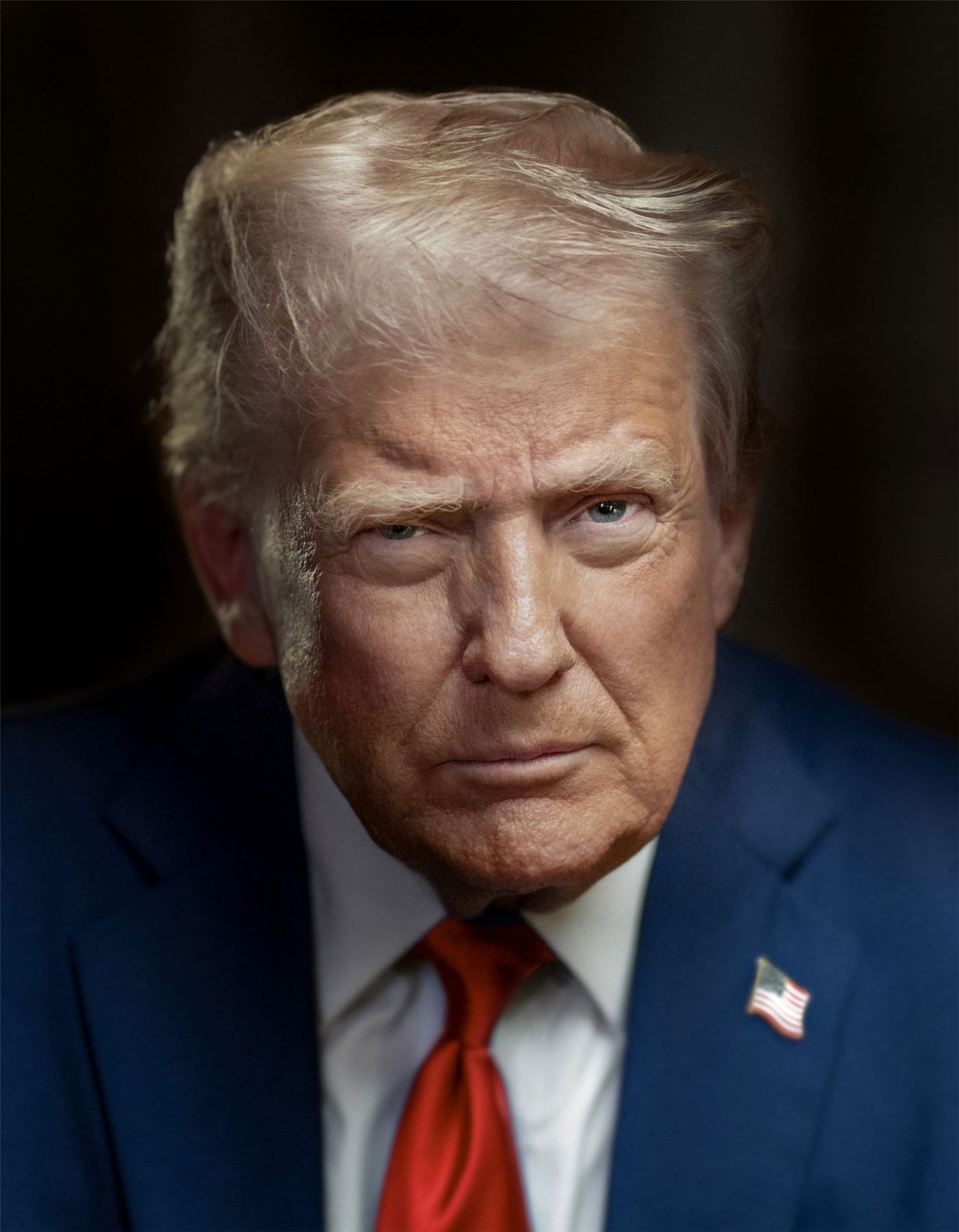
Citing multiple people familiar with the matter, the Journal reported on Nov. 21 (U.S. time) that Trump pressed aides before his Nov. 16–19 Asia trip to arrange a meeting with North Korean leader Kim Jong Un. U.S. officials considered a declaration formally ending the Korean War as groundwork for the talks. Unlike a legally binding peace treaty, such a declaration is a political and symbolic step. The paper said Trump, in need of a foreign-policy win after Republican losses in the midterm elections, hoped to use it as a bargaining chip.
광고 문의 · 300×250The package went beyond an end-of-war declaration. Officials reportedly discussed a statement that would not formally recognize North Korea as a nuclear state but would not demand it dismantle its nuclear program either; a request that Pyongyang limit nuclear and missile tests if it accepted; and opening a liaison office ahead of formal diplomatic ties. The Journal called it a major policy shift, noting that merely talking with Kim without demanding denuclearization could alarm South Korea, Japan and European allies.
The report also described Pyongyang’s coldness. Trump reached out to Kim several times last year by phone and through existing channels, without reply. A White House official later waited outside North Korea’s U.N. mission in New York and handed a Trump letter to a North Korean diplomat, who then tossed the unopened envelope in front of a U.S. representative at a U.N. meeting, the paper said.
A reunion that never came in Shenzhen
Trump said repeatedly in public that he wanted to meet Kim before the APEC summit in Shenzhen, China, but flew home right after a U.S.-China-Russia meeting with Chinese President Xi Jinping and Russian President Vladimir Putin on Nov. 19. It was the second year running that a meeting failed to materialize, after last October’s APEC in Gyeongju. In a phone interview with NBC before leaving Shenzhen, Trump said he has a good relationship with Kim, that it did not work out this time and that they would meet someday. A Trump administration official, however, denied the report, saying there had been no effort to arrange a meeting, and the White House said its goal of North Korean denuclearization is unchanged.
Instead of responding, Kim toured provincial sites throughout the trip, including Samjiyon in Ryanggang Province, Riwon and Rakwon counties in South Hamgyong Province and the naval academy in Hamhung. In February he said ties could improve if Washington respected the state status written into North Korea’s constitution and dropped its hostile policy, widely read as making recognition as a nuclear state a precondition for talks. The Journal noted that estimates of North Korea’s warheads have grown from 20–30 in 2019, when the two leaders last met, to about 60, and that it is fielding solid-fuel ICBMs able to reach the U.S. mainland. Analysts add that support earned by sending troops to Russia and large cryptocurrency hacks have reduced Pyongyang’s urgency to talk.
Lee’s plans tested among the great powers
For the Lee government, which hoped to use U.S.-North Korea dialogue as a lever to restore inter-Korean ties, the report brings both hope and strain. President Lee has cast Trump as the ‘peacemaker’ and South Korea as the ‘pacemaker’, backing talks between Washington and Pyongyang. But a senior presidential official said on Nov. 12 that contact around APEC was unlikely, and when asked whether Washington might recognize North Korea as a nuclear state in a summit, said only that this lay beyond what the government had considered and that Seoul and Washington were in close communication. With North Korea having announced it will resume loudspeaker broadcasts aimed at the South, the door to inter-Korean contact remains shut.
Alliance issues are also moving slowly. Seoul and Washington postponed to early next year the 58th Security Consultative Meeting (SCM), which is to set a target year for transferring wartime operational control (OPCON), opting for a two-step approach: broaden consensus at defense ministers’ talks in December, then coordinate top-down at the leaders’ level. Some analysts say a 2028 transfer is still possible if a decision early next year is followed by roughly a year of Full Mission Capability (FMC) assessment, but uncertainty over a transfer within Lee’s term has grown. Construction of nuclear-powered submarines, included in the joint fact sheet from last November’s summit, also awaits nuclear-agreement talks on uranium enrichment and spent-fuel reprocessing that have yet to begin in earnest.
Trump’s great-power politics further complicate Seoul’s math. At a White House press conference on Nov. 20, he confirmed that the trilateral meeting discussed reducing risks on the Korean Peninsula but gave no details. South Korea’s Foreign Ministry had earlier told China that the meeting must not become a ‘second Yalta’, yet Trump posted photos of the summit next to a 1945 Yalta photo with the caption ‘The Great Powers 1945, 2026’. Amid concern that the peninsula could be discussed without Korea at the table, Seoul faces a dual task: gaining autonomy through the OPCON transfer and nuclear submarines without shaking coordination with Washington.
A third perspective
Official language in Beijing and Washington has been restrained. China’s Foreign Ministry readout of the trilateral meeting mentioned the peninsula in a single sentence, saying the three leaders exchanged views on major international and regional issues including the Ukraine crisis, nuclear nonproliferation, the Middle East and the Korean Peninsula, with no further position stated. The U.S. administration denied the Journal’s report and repeated its denuclearization principle, but the paper noted that the State Department has no concrete North Korea plan and that the special envoy post is vacant. It also said China has lately not opposed North Korea’s nuclear status in public, warning that Pyongyang’s arsenal is becoming a fait accompli.
North Korea has answered with silence while asserting itself through protocol. The Russian Embassy in Pyongyang said on Telegram on Nov. 22 that Ambassador Andrei Podelyshev presented his credentials directly to Kim, and TASS reported it was the first time in about 30 years that North Korea’s top leader personally received a foreign envoy’s credentials. The change follows a constitutional revision in March giving the chairman of the State Affairs Commission that authority, and is seen as a display of his standing as a normal head of state. Between a North Korea in no hurry to deal with Washington and showcasing its ties with Moscow, a China that lists the peninsula only as an agenda item, and a United States eager for results, Korea’s ethnic Chinese community, whose daily life is bound up with China-Korea relations and inter-Korean calm, is watching closely for Seoul’s next move.