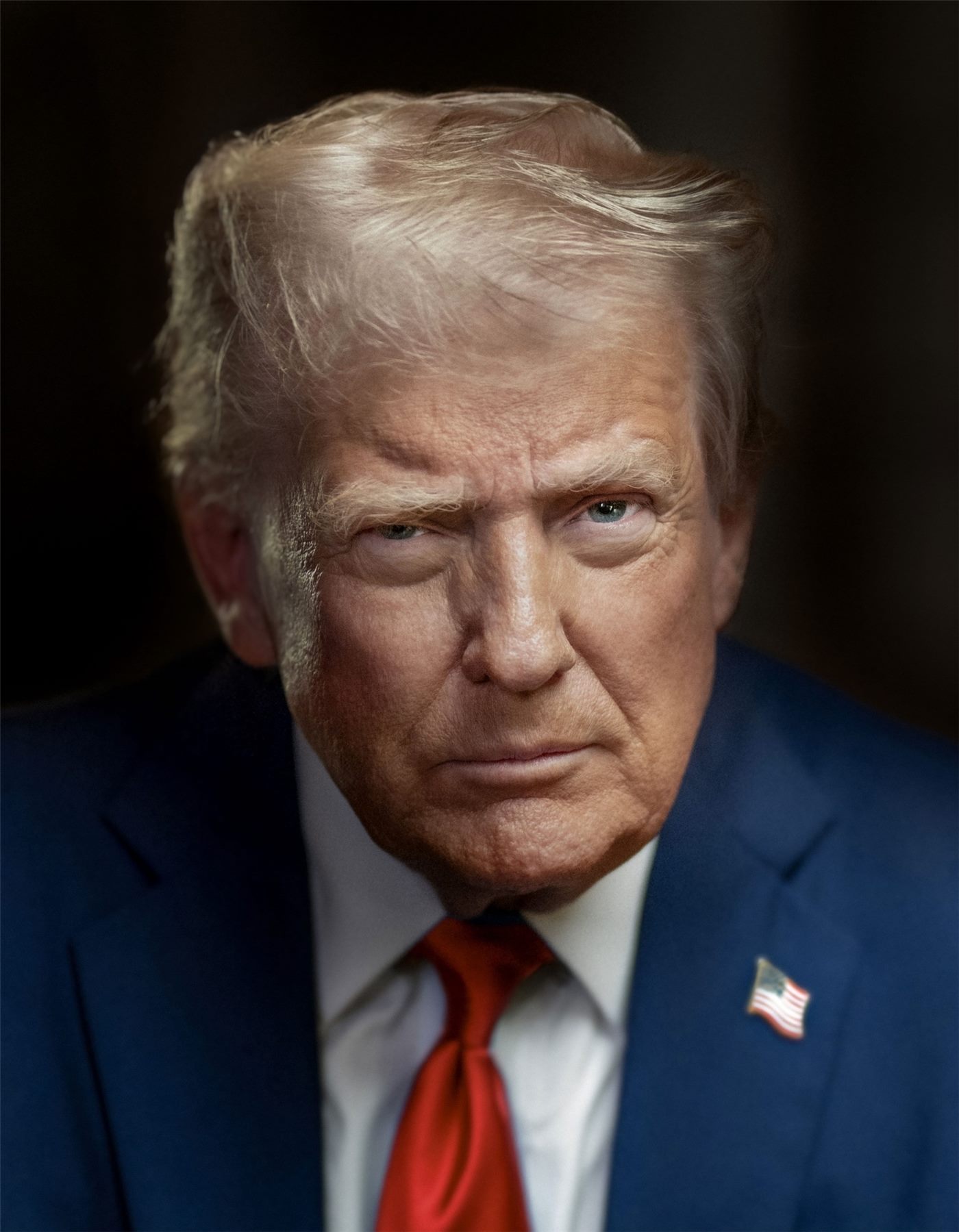
After the Trump-Xi meeting in Shenzhen, US Treasury Secretary Scott Bessent said the two leaders agreed AI must not decide major military actions on its own. President Trump said the US wants only older chips sold to China and is negotiating a ‘very comprehensive deal.’
Following the November 19 meeting in Shenzhen between US President Donald Trump and Chinese President Xi Jinping, the two countries are reported to have found common ground on a military ‘floor’ even as they compete fiercely for leadership in artificial intelligence. According to Taiwan’s Central News Agency (CNA), the Liberty Times and Cnyes, citing Reuters and CNBC, Treasury Secretary Scott Bessent said on November 20 that the two leaders agreed that ‘military decisions made using AI must involve humans.’ Bessent described this as one of the important outcomes of Trump’s Asia trip.
광고 문의 · 300×250‘No major military action can be launched without human involvement,’ Bessent said, adding that the understanding covers human participation in decisions as well as other safety safeguards, and will not be affected by AI competition. He used the Trump administration’s preferred term, ‘Super Intelligence’ (SI). At the same time, he said keeping US AI labs ahead is the best defense against ‘dangerous’ Chinese AI models that could be used in cyberattacks, signaling that the competitive stance remains. According to Cnyes, Bessent has also discussed with Chinese Vice Premier He Lifeng a US-China AI communication channel to share information on technology threats.
China’s account: ‘AI must always remain under human control’
The principle of human control over AI also appears clearly in China’s official readout. According to Xinhua, in a report carried by Huanqiu and other outlets, Xi said the two sides should strengthen coordination and communication to ‘guard against AI safety risks and ensure that AI always remains under human control.’ Xi also said building a ‘constructive strategic stability relationship’ based on mutual respect, fairness and reciprocity is a pioneering undertaking, and that leader-level diplomacy plays an irreplaceable guiding role. On trade, he called for more communication, addressing each other’s concerns and pursuing mutual benefit.
Xinhua reported that Trump mentioned cooperation in agriculture, energy and superintelligence, and praised results in counternarcotics and fentanyl cooperation. According to Xinhua, Trump said ‘the United States does not support Taiwan independence,’ while Xi urged the US to ‘keep doing the right thing’ on Taiwan and avoid major setbacks in relations. Both sides called the meeting positive and constructive, and agreed to draw up an action plan for the ‘constructive strategic stability relationship’ to implement the leaders’ consensus.
CNA reported that Trump told Fox News after the meeting that he and Xi both want to regulate AI for security reasons and will work together on reasonable AI governance rules. At their September summit, the two sides agreed to set up a bilateral channel for handling ‘superintelligence’-related incidents, and the Chinese side has proposed agenda items such as risk classification and incident-reporting procedures. The ‘human control’ principle is seen as the first substantive common ground in that dialogue.
Chips: ‘only older ones’ as a comprehensive deal is discussed
On chip exports, the two sides’ calculations still diverge. According to Reuters, asked at a press conference on November 20 after his Asia trip whether he would ease chip export bans following his meeting with Xi, Trump said: ‘We want only older chips, and we don’t mind if none go. But only older.’ He added, ‘We’re talking about a very comprehensive deal with China,’ without giving details. Trump also noted that China makes chips too, and that if the US does not sell them, China will make its own.
Bessent said the H200 remains the most advanced Nvidia chip China can buy under the current licensing system, and he does not expect export policy to change. He said Chinese orders for the H200 are limited because China is focused on building its own chip technology, and assessed that China ‘may still be years behind.’ He played down reported differences with Commerce Secretary Howard Lutnick over how tough to be on China, saying ‘everyone follows the President’s instructions.’ He also said the controversy surrounding Nvidia chief Jensen Huang was not raised in the leaders’ talks, and Trump likewise said he did not spend much time on the matter.
The trend matters for Korea and the ethnic Chinese community in Korea as well. If Washington settles on locking up cutting-edge chips while allowing only older products, Korean memory and equipment makers with production bases in China will need to keep watching the scope of US controls and the details of any ‘comprehensive deal.’ For ethnic Chinese entrepreneurs in Korea-China materials and components trade, logistics and commerce, the direction of a US-China deal is a variable shaping deal terms and demand outlooks. Conversely, the survival of a leader-level channel and a minimum safety valve on military AI can be seen as factors that slightly reduce supply-chain uncertainty.
A Third View
South Korea hosted the 2024 Responsible AI in the Military Domain (REAIM) summit in Seoul, helping put human control over military AI on the international agenda, so Seoul may see the US-China leader-level understanding as a boost to multilateral norm-setting. Taiwanese media, beyond the AI agreement, gave greater weight to Xi’s remarks on Taiwan and to Xinhua’s account of Trump saying he ‘does not support Taiwan independence.’ How managed US-China competition will affect Taiwan’s semiconductor standing and security is the main concern in Taiwan.
The European Union’s AI Act makes ‘human oversight’ a core principle for high-risk AI, but military uses fall outside its scope. Against that backdrop, the US and China directly invoking human control in the military domain is seen by some as a possible starting point for filling a normative gap, while others caution that, with no binding text or verification mechanism made public, it may remain declaratory. Ultimately, the agreement’s effectiveness will depend on whether follow-up AI talks and the action plan take concrete shape.