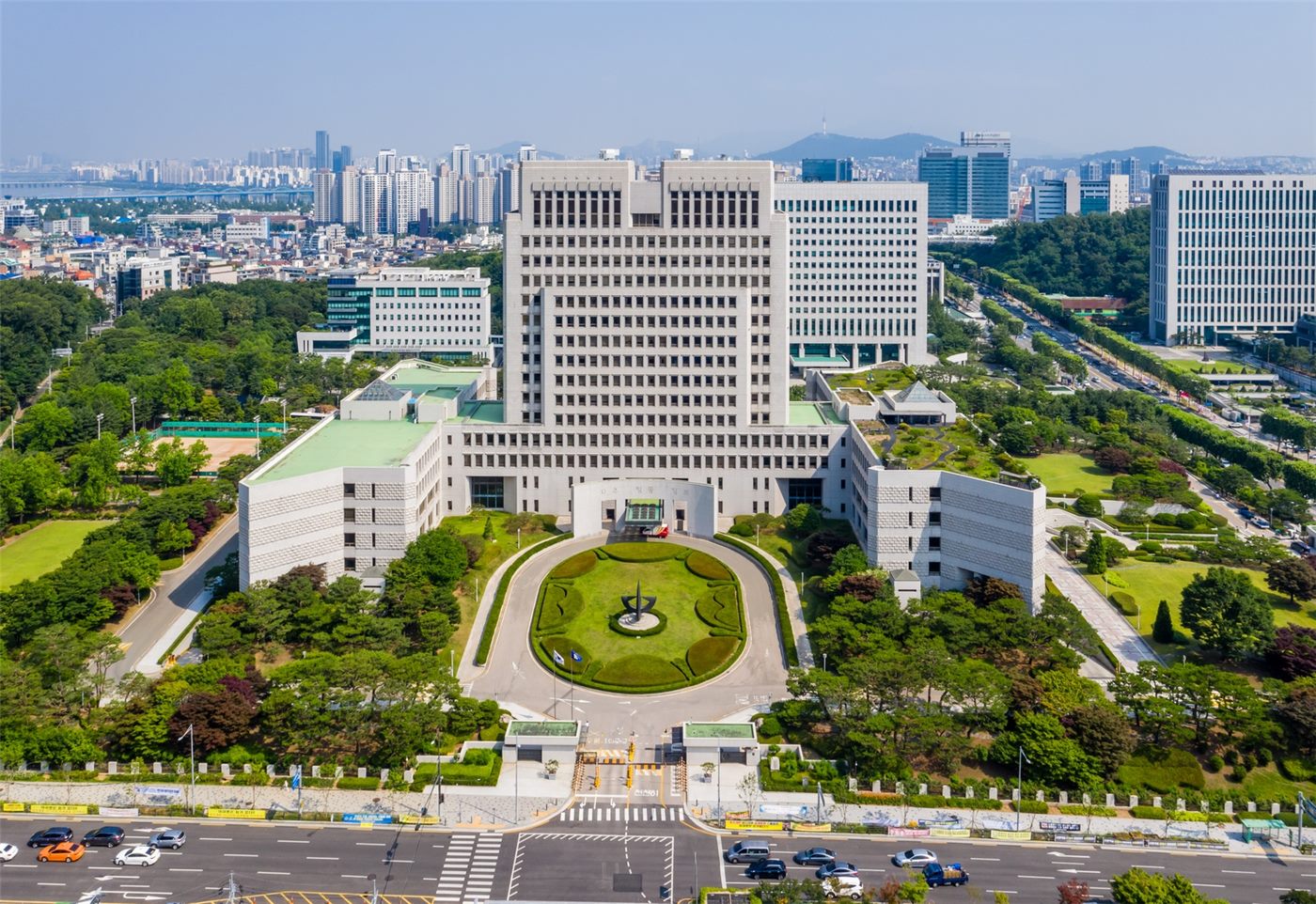
The en banc Supreme Court on Nov. 19 ruled that the Dec. 3 martial law amounted to insurrection, but found no intent to subvert the constitution in former Prime Minister Han Duck-soo’s recommendation to convene a cabinet meeting. His 15-year sentence was set aside and the case sent back to the Seoul High Court, drawing sharply divided reactions from the parties.
South Korea’s Supreme Court, sitting en banc, on Nov. 19 overturned the 15-year prison sentence handed to former Prime Minister Han Duck-soo on charges including engaging in key duties of an insurrection, and remanded the case to the Seoul High Court. According to the Kyunghyang Shinmun and Pressian, it is the top court’s first ruling on insurrection charges, coming 716 days after martial law was declared on Dec. 3, 2024. The court first made clear that the martial law itself constituted insurrection under the Criminal Act. Mobilizing the military and police to seize control of the National Assembly and the media when no national emergency existed violated the constitutional order and citizens’ basic rights, it said.
광고 문의 · 300×250At issue were three acts the appeals court had found criminal. The Supreme Court accepted that Han had the purpose of subverting the constitution when he asked cabinet members to sign documents and when he discussed plans to blockade the Assembly and cut power and water to media outlets. But it held that such a purpose was not proven for his recommendation to then-President Yoon Suk Yeol that the declaration first go through cabinet deliberation. Because the three acts form a single offense, the entire guilty finding was set aside.
‘Recommending a cabinet meeting was a legitimate duty’ – a 9-3 split
Nine of the 12 justices who heard the case formed the majority. They found that recommending cabinet deliberation before martial law was a call to follow procedures set by the Constitution and the Martial Law Act, and appeared aimed at making the state abide by the Constitution. On its own, it could hardly be regarded as taking part in an insurrection, the majority said. The ruling is seen as narrowing the criminal liability of senior officials who played procedural roles in the martial-law process.
Three justices dissented, arguing that the cabinet-meeting recommendation was part of the same chain of acts carried out for the same purpose and should have been found guilty. Meanwhile, some of Han’s convictions, including perjury at Yoon’s impeachment trial and falsely drafting the martial-law proclamation after the fact, became final with the ruling. As a result, his detention, which was due to expire at midnight on Nov. 20, was extended by two months, and he will not be released immediately.
Legal experts expect the ruling to serve as a benchmark for other cases involving cabinet members tied to the martial law. While branding the martial law itself an insurrection, the court drew a line against automatically punishing officials whose roles were merely formal, such as convening meetings or handling procedure. On remand, the sentence is expected to be recalculated based on the acts other than the cabinet recommendation.
Democrats cry ‘historic betrayal’, PPP ‘respects the ruling’ – political turmoil ahead
The Democratic Party reacted furiously. Party leader Kim Min-seok called the ruling “an excuse for historical opportunists,” saying Han had silently gone along instead of stopping or dissuading the move. Chief spokesperson Park Sung-joon said the verdict read like a “declaration of sympathy for insurrection,” denouncing it as a “judicial insurrection.” The party held an emergency caucus and decided to pursue the impeachment of Chief Justice Cho Hee-dae, while the Rebuilding Korea Party held a press conference and a candlelight rally calling for the same.
The People Power Party said it respects the court’s judgment. Floor leader Chung Jeong-sik said impeaching the chief justice was “something only backward countries do,” and party leader Jang Dong-hyuk claimed the judiciary had dealt a heavy blow to the Lee Jae-myung government. With the clash between the courts and the legislature over the insurrection trials now spilling into an impeachment fight over the chief justice, year-end politics look set for further upheaval. For the ethnic Chinese community watching the direction of Korean politics and rule of law, the ruling and its aftermath will be a major point of interest.