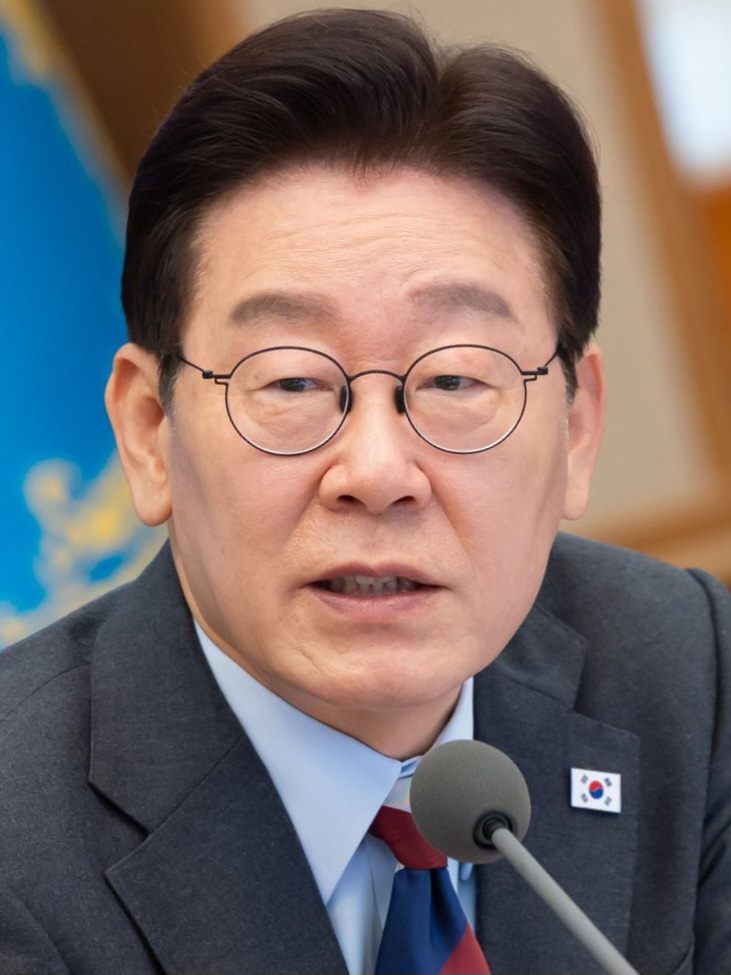
South Korean President Lee Jae-myung and Chinese President Xi Jinping met on Nov. 18 in Shenzhen, host city of this year's APEC summit, confirming a substantive conclusion of follow-up talks on services and investment under the Korea-China FTA and sharing a commitment to peace on the Korean Peninsula. China pledged most-favored-nation treatment for Korean films and games, and joint production will expand to dramas and animation. Speaking at the APEC CEO Summit the same day, Lee said openness must not stop as crises deepen.
According to Asia Economy, the two leaders met for 35 minutes, from 11:05 to 11:40 a.m., at the Qilin Mountain Villa in Shenzhen. It was their third summit, after Gyeongju last November and Beijing in January, and came a day before a US-China-Russia meeting. Both sides said relations had fully recovered and agreed to develop their strategic cooperative partnership further around next year's 35th anniversary of diplomatic ties.
광고 문의 · 300×250According to a Xinhua report carried by The Paper, Xi called China and South Korea friendly neighbours and strategic cooperative partners, saying the two countries differ in national conditions but share the goal of improving their people's welfare. He said both sides should uphold strategic autonomy to safeguard the political foundation of relations. Noting that the second phase of FTA negotiations was basically complete, he proposed making good use of it, strengthening macroeconomic policy coordination and jointly building cooperation in emerging industries such as artificial intelligence.
The same report said Lee described the momentum of full recovery as steadily consolidating, with trade and people-to-people exchanges growing quickly. Xinhua reported that Lee said South Korea's position of adhering to the one-China policy has not changed and will not change. Lee congratulated China on hosting APEC and proposed more high-level exchanges, deeper trade, investment and supply-chain cooperation, and a more mature strategic partnership.
FTA Deal Done: Will It Ease the Hallyu Restrictions?
According to The Financial News and Asia Economy, the two sides announced a substantive conclusion of follow-up negotiations on the services and investment chapters of the Korea-China FTA, which took effect in 2015. Talks launched in March 2018 stalled for a time but gathered pace after the January Beijing summit, when both sides agreed to produce results within the year. A substantive conclusion means the core issues are settled while some technical text remains, to be followed by working-level finalisation, legal review, formal signing and entry into force.
Asia Economy reported that China will give Korean films and games most-favored-nation treatment, no less favourable than that given to third countries, and apply non-discrimination to pre-screening of online games and films. Seoul's trade ministry said it is the first time China has included such terms in a trade agreement. The Kyunghyang Shinmun said co-production, previously limited to films, will cover dramas, animation, variety shows and documentaries; Korean travel agencies with entities in 23 regions including Beijing may sell outbound tours locally; and Korean retailers with 30 or more stores may open outlets without a Chinese joint-venture partner. Forced technology transfer as a condition of investment will also be banned.
According to the Kyunghyang Shinmun, Xi said China is willing to develop healthy and beneficial cultural exchanges step by step, and the two leaders agreed to cooperate on film co-production. The paper cited sources as saying China still views large K-pop concerts as difficult, and noted that even if the restrictions in place since the 2016 THAAD deployment are easing, real market opening will take time. Asia Economy likewise said the test will be actual approvals, such as game licences and film releases.
The peninsula was also on the table. According to National Security Office chief Wi Sung-lac, Lee said peace and stability on the peninsula serve both countries' common interests, called for jointly opening an era of peaceful coexistence and asked China to play a constructive role. Cheong Wa Dae said Xi praised Seoul's efforts to reduce tension, briefed Lee on recent China-North Korea relations and expressed support for efforts including US-North Korea dialogue. Lee also asked for a fundamental solution to Chinese structures in the Yellow Sea Provisional Measures Zone, protection of Korean nationals' rights in China and preservation of independence movement sites, and proposed bringing a pair of pandas to Korea.
CEO Summit: Openness Must Not Stop as Crises Deepen
According to the Kyunghyang Shinmun, Lee told the APEC CEO Summit at the Qianhai International Convention Center in Shenzhen that resolving the security and economic instability facing any one country has become a shared task for all. He called for a system to detect supply-chain risks early and for cooperation on stable supplies of critical minerals and energy, saying the deeper the crisis, the clearer the answer, and that openness, APEC's founding spirit, must not stop despite rising trade barriers. Citing the APEC AI Initiative adopted in Gyeongju last year, he urged cooperation on industrial foundations and supply chains so that AI benefits everyone.
Asia Economy reported that Lee said bilateral exchanges could top 10 million visits this year and proposed restoring the 2016 level of about 13 million, while continuing immigration facilitation measures. Lee also held a lunch with Korean residents of southern China in Shenzhen. For the overseas Chinese community rooted in Korea, the summit matters. Easier travel and entry, and the opening of content, retail and tourism sectors, are changes felt directly by huaqiao families who live and do business across both countries and by small trade and travel firms; whether the recovery ahead of the 35th anniversary turns into real approvals and exchanges deserves calm attention.
A Third View
Seen from Washington, the summit took place on the day Donald Trump arrived in Shenzhen and a day before the US-China-Russia meeting. The Kyunghyang Shinmun cited analysis reading Xi's reference to strategic autonomy as a message aimed at the United States. Seoul, by contrast, presents the outcome as pragmatic diplomacy that restores economic and human exchanges with China while keeping the US alliance as its axis, so the same phrase invites different readings.
Japan, Taiwan and North Korea offer different angles too. At the Quad summit in Manila a day earlier, Japan and its partners voiced concern about economic coercion including arbitrary export restrictions, while South Korea was finalising a market-opening deal with China, highlighting a gap in approaches to Beijing. For Taiwan, Xinhua's report that Lee reaffirmed the one-China policy is the point to watch. On North Korea, Cheong Wa Dae stressed Xi's support for US-North Korea dialogue, whereas, according to the Kyunghyang Shinmun, China's foreign ministry readout did not mention the peninsula, showing different emphases in the two sides' accounts.