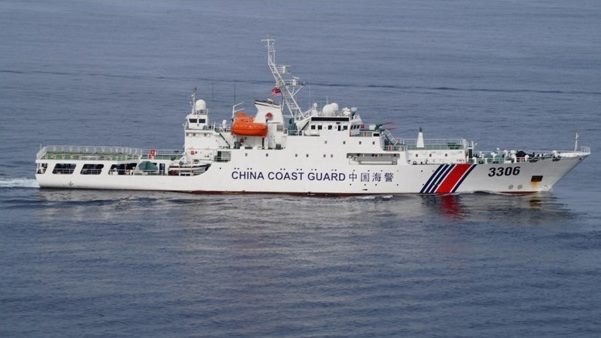
The China Coast Guard vessel Sandu concluded a port visit to Penang, Malaysia, on Nov. 13. The two sides agreed to set up a stable dialogue mechanism and to sign a maritime law enforcement cooperation memorandum as soon as possible.
The China Coast Guard cutter Sandu has concluded a port visit to Penang, Malaysia. According to a China Coast Guard announcement carried by Huanqiu.com and China News Service on Nov. 13, the ship conducted visit activities in Penang from Nov. 9 to 13. Malaysia's Chinese-language Oriental Daily reported that the Sandu berthed at Swettenham Pier on the morning of Nov. 10 for a four-day official visit.
광고 문의 · 300×250The Sandu, hull number 5308, is a coast guard patrol vessel that left Sanya in Hainan province on Nov. 5. The visit returns a call made to Sanya in June last year by the Malaysian Maritime Enforcement Agency (MMEA) vessel Tun Fatimah, hull number 8305, marking a second straight year of exchanges between the two coast guard bodies. Oriental Daily said it is the first bilateral official port visit to Malaysia by a Chinese coast guard ship since diplomatic ties were established.
The China Coast Guard said its delegation held high-level talks with the MMEA on Nov. 11, covering personnel exchanges, information sharing, maritime search and rescue and joint law enforcement. Both sides agreed to deepen practical cooperation at sea and properly handle maritime emergencies. The ships also took part in a search-and-rescue tabletop exercise, formation training and a joint communications drill.
Dialogue Mechanism and an MOU in the Works
According to the China Coast Guard, the two sides agreed to establish a stable dialogue mechanism, sign a memorandum of understanding on maritime law enforcement cooperation as soon as possible, and work toward a regional maritime liaison channel. The agency said it will continue practical cooperation with the coast guards of Malaysia and other countries.
The Malaysian side underlined its principles. Oriental Daily quoted the MMEA's Penang director as saying all cooperation must respect Malaysia's sovereignty and sovereign rights and be grounded in international law, including the 1982 UN Convention on the Law of the Sea. The MMEA said the professional cooperation would not affect national sovereignty and that its monitoring and enforcement duties in Malaysian waters would continue. Building trust through humanitarian areas such as search and rescue and navigational safety was seen as a defining feature of the exchange.