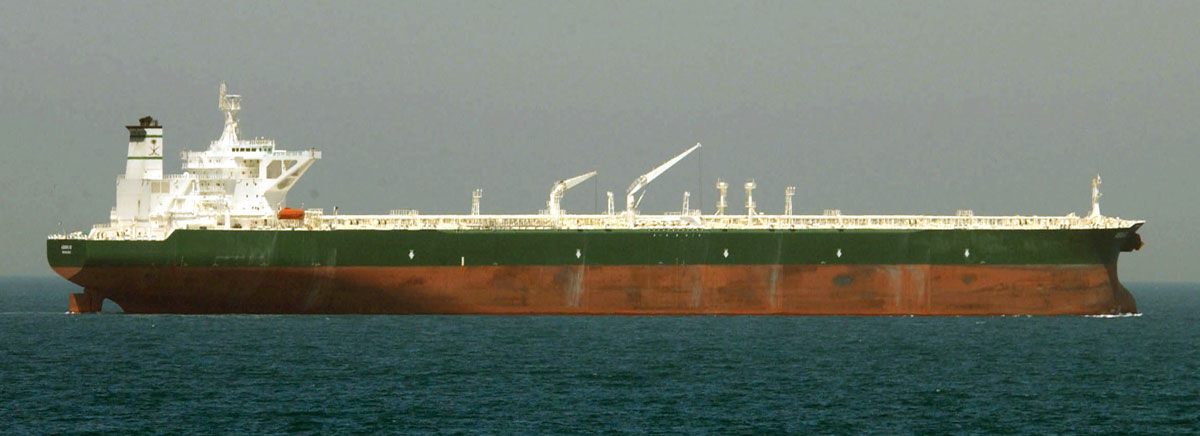
At least five tankers were hit by explosions or fires in the Strait of Hormuz over three days from Nov. 10, worsening oil pollution along Gulf coasts. Oil prices erased early losses and rose about 1% after U.S. President Donald Trump said on Nov. 12 that a deal with Iran was no longer needed.
According to Kyunghyang Shinmun, citing Iran’s Islamic Revolutionary Guard Corps (IRGC) and foreign media, a series of tanker explosions and fires hit the southern shipping lane of the strait over three days from Nov. 10, damaging at least five vessels. On the night of Nov. 11, two very large crude carriers holding more than 4 million barrels between them exploded in the southern lane, while on Nov. 10 three tankers, one of them under U.S. military escort, reportedly struck mines. Part of the damage tally comes from the IRGC, a party to the conflict, and has not been independently verified.
광고 문의 · 300×250Oil leaking from damaged ships is washing ashore in neighbouring countries. Oman’s National Emergency Management Committee held an emergency meeting on a tanker grounding near Al Kibliyah Island and inspected pollution along the Musandam coast. In the United Arab Emirates, oil from the tanker Gem No. 2, attacked last month, closed beaches across the northern emirates, and Al Lulu beach reopened only on Nov. 12.
Slicks visible from space: Greenpeace counts 540 spills, 20,000 sq km
IBTimes and other outlets, citing The Guardian, reported on Nov. 12 that slicks around the strait are visible from space. Greenpeace has counted 540 war-linked oil spills as of Nov. 12, with daily mapped footprints adding up to about 20,000 square kilometres, roughly the size of Wales. The International Maritime Organization has confirmed at least 134 incidents in the strait as of Nov. 11, with at least 25 deaths.
The UAE relies on desalination for more than 80% of its drinking water, and the Gem No. 2 slick was reported about 2 km from the seawater intake of the Naqa’a desalination plant, though no shutdown has been announced. Marine biologist Bernhard Riegl of Nova Southeastern University warned that the Gulf’s shallow, warm waters leave corals, algae and fish little refuge, adding that there is no such thing as a ‘clean war’.
Trump: ‘We’ve got their money and their Strait’; Qatari plan in doubt
Writing on Truth Social on Nov. 12 (U.S. time), Trump said, “We don’t need a deal with Iran. Those days have long since passed,” adding that Washington held hundreds of billions of dollars of Iran’s money and its strait. He had said for weeks that the war would end after the midterm elections and that a deal remained possible, and The National described the post as a shift. Trump also said Vice President JD Vance, who had been involved in outreach to Iran, would now focus on alleged corruption in Democratic-led states.
Taiwan’s United Daily News and others reported that oil rebounded by more than 1% after the remarks. As of 16:45 GMT on Nov. 12, Brent was up 1.1% at $93.80 a barrel and West Texas Intermediate up 0.55% at about $87, according to Turkish media. Brent briefly jumped nearly $2 during the session but was still down almost 5% on the week, while European natural gas surged 6.7%.
Foreign media have reported that Qatar’s prime minister carried an Iranian proposal for an interim deal to the White House. Under the plan, according to unnamed diplomatic sources, Iran would reopen the strait and halt tanker attacks while the U.S. would lift its blockade and release $8 billion in Iranian funds frozen in Qatar, though neither government has confirmed it. Iranian Foreign Minister Abbas Araghchi says his offer to reopen the strait within two days stands if the war ends on all fronts. South Korea imports much of its crude from the Middle East, so swings in oil prices and freight rates feed quickly into consumer prices, and ethnic Chinese business owners and traders in Korea should watch fuel and logistics costs closely.