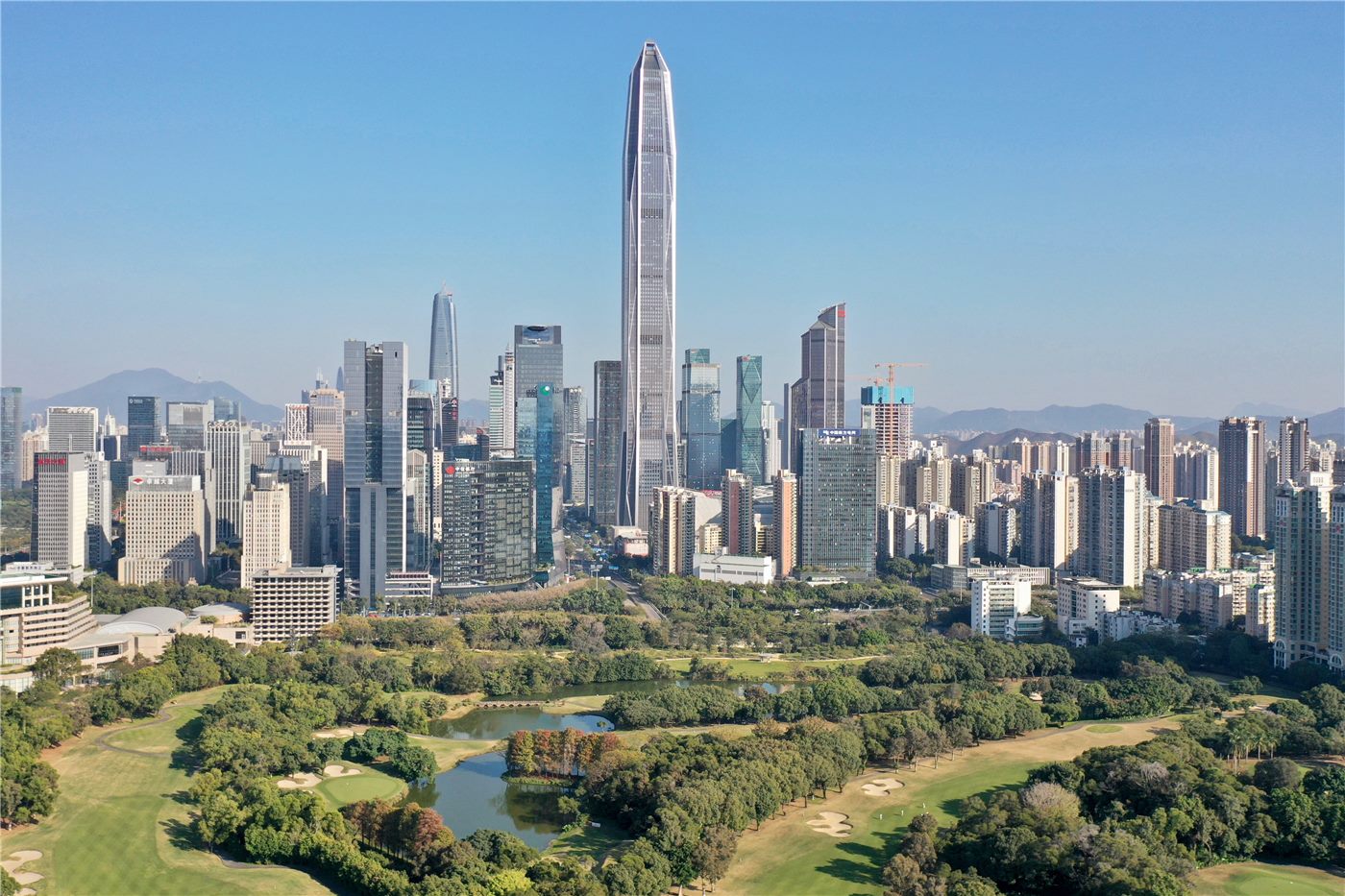
The 33rd APEC Economic Leaders' Meeting, hosted by China for the first time in 12 years, opens in Shenzhen, Guangdong, on November 18-19. Chinese media are amplifying the Asia-Pacific community message, and former Singapore foreign minister George Yeo says China will exercise gentle but important leadership.
The 33rd Asia-Pacific Economic Cooperation (APEC) Economic Leaders' Meeting will be held in Shenzhen, Guangdong province, on November 18-19. With a week to go, Chinese media have run a series of pieces revisiting the forum's founding spirit and stressing regional cooperation. Huanqiu.com carried the host's message under headlines such as Revisit APEC's Original Aspiration and Build an Asia-Pacific Community Together, and The Great Way: Asia-Pacific Tides Rise, Sailing Together in One Boat.
광고 문의 · 300×250According to China Media Group and the Shenzhen government, leaders' week begins with the final Senior Officials' Meeting in Shenzhen on November 14-15, followed by the APEC CEO Summit on November 17-18 and the informal leaders' meeting of the 21 member economies on November 18-19. Earlier, Foreign Minister Wang Yi and Commerce Minister Wang Wentao co-chaired the 37th APEC Ministers' Meeting by video on November 3, and finance ministers met in Hong Kong on October 19-21.
Building an Asia-Pacific community, 12 years after the last China APEC
The theme of APEC China Year is Building an Asia-Pacific Community for Common Prosperity, with openness, innovation and cooperation as its three priorities. According to People's Daily, China has emphasized opposing protectionism, liberalizing and facilitating trade and investment, cultivating new growth drivers and sharing policy experience, with practical work on the Free Trade Area of the Asia-Pacific (FTAAP), connectivity, the digital economy and artificial intelligence. Chen Xu, chair of the 2026 Senior Officials' Meeting, said all members unanimously endorsed China's proposed theme and priorities at an informal senior officials' meeting last December.
This is China's third time as host, after Shanghai in 2001 and Beijing in 2014, meetings that produced the Shanghai Accord and the Beijing Agenda. At the November 3 ministerial meeting, Wang Yi said China had held more than 300 meetings and events this year, calling the leaders' meeting an important gathering for the region's future and pledging to work for fruitful outcomes. Wang Wentao said that with global turbulence and rising risks of supply-chain fragmentation, APEC should keep offering practical Asia-Pacific solutions.
Shenzhen is stepping up preparations. According to CGTN, the city is strengthening coordination on conference services, security, healthcare, food safety, transport, communications and volunteers. Under a Green Travel, Smooth Journey for All plan, it is adding more than 50 bus-metro feeder routes, raising bus capacity by 20 percent and encouraging flexible working hours during the summit week. Choosing Shenzhen, a symbol of China's reform and opening-up, is widely seen as a way to underline innovation and openness.
Overseas voices: gentle but important Chinese leadership
On November 11, the Global Times published an exclusive interview with George Yeo, Singapore's former foreign minister, under the headline China Will Play a Gentle and Important Leadership Role. Sino Bridge Times was unable to verify the full content of the interview. In a March interview with Caixin, Yeo said zero-sum competition was spreading in many parts of the world and expressed hope that China, as host, would set an optimistic tone and promote positive-sum thinking. Recalling that U.S. officials were tense on arrival at the 2001 Shanghai APEC until dialogue began, he said that with regional tensions rising again, it was once more the turn of a China-hosted summit to play its part.
The Global Times also interviewed Australian National University economist Peter Drysdale the same day. He called Shenzhen an outstanding innovation ecosystem and said the meeting would test whether members can overcome barriers to cooperation on green development, the digital economy and connectivity. He described stable China-U.S. relations as a regional public good and APEC as a platform for managing those relations within a multilateral framework, noting that although the United States has stepped back from parts of the international order, it has not left APEC.
The meeting is drawing international attention partly because of the possibility of another meeting between the Chinese and U.S. leaders. Analysts note, however, that the 21 member economies differ widely in interests and development levels, so turning a broad agenda into an outcome document acceptable to all will be the key challenge. Having taken over the chair from South Korea, which hosted last year's meeting in Gyeongju, China's handling of economic cooperation and supply-chain issues with Korea is also being closely watched by the ethnic Chinese community in Korea and business circles in both countries.