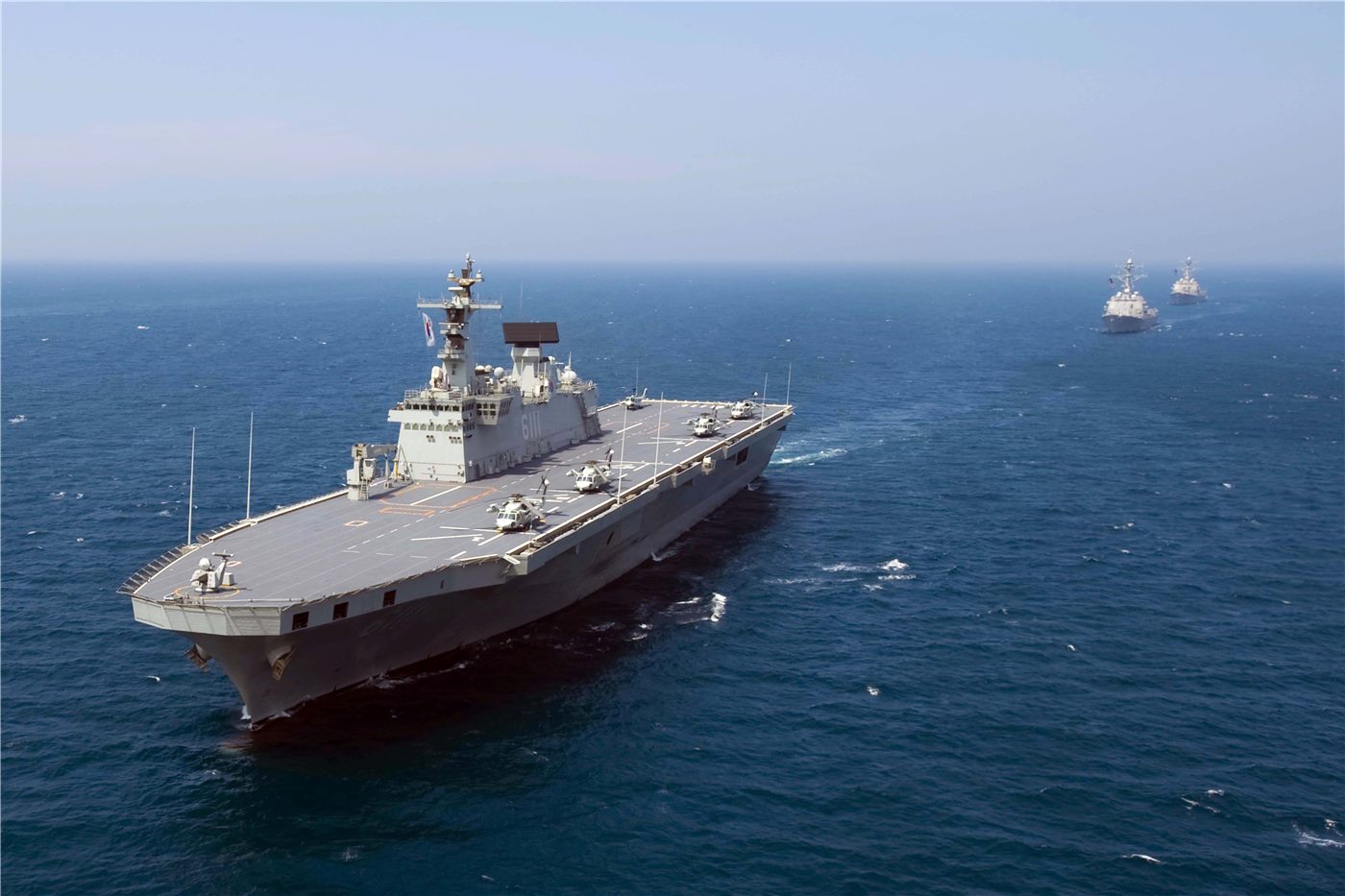
South Korea's Cabinet approved a bill extending the Cheonghae naval unit's deployment and widening its operating area to open waters south of Oman, about 650 km from the Strait of Hormuz, and began sending it to the National Assembly. After Iran publicly urged restraint, the Foreign Ministry stressed a principle of non-involvement in the war.
According to the Kyunghyang Shinmun, the Cabinet, at a meeting chaired by President Lee Jae-myung on November 10, approved a revised consent bill on extending the dispatch of Korean military units to Somali waters and the open sea south of Oman. The bill will soon go to the National Assembly, where it needs a majority vote with a majority of members present. Details such as the length of the extension were not specified in the day's reports.
광고 문의 · 300×250The core of the bill is to expand the Cheonghae Unit's operating area from the Gulf of Aden to the open sea south of Oman, about 650 km from the Strait of Hormuz. One P-8 Poseidon maritime patrol aircraft, mine-countermeasure equipment including unmanned underwater and surface vehicles and remotely operated underwater robots, and an explosive ordnance disposal team will be added. The extra 75 personnel will raise the unit's strength from 320 to 395. The Defense Ministry had earlier cited a deteriorating security situation, including a surge in piracy, as the reason for the expansion.
Iran responded quickly. Iranian Foreign Ministry spokesman Esmaeil Baghaei said on November 9, local time, that South Korea should refrain from deploying forces to the region on the pretext of supporting the reopening of the Strait of Hormuz and should not step into an already complicated situation. He added that he hoped Korea would not be seen as an accomplice, alongside the United States and others, in what he called military aggression.
A South Korean Foreign Ministry spokesperson told a regular briefing that the dispatch is meant to protect Korean nationals and economic interests and follows a principle of neither taking part in nor intervening in the war. The ministry said it is explaining the government's position to Iran and other countries concerned and will keep communicating with the international community, while the Defense Ministry said it understood that talks with Iran were under way through diplomatic channels. Former deputy defense minister Shin Beom-chul suggested Tehran may have sent a strong pre-emptive message out of concern that a bolstered Cheonghae Unit could feed broader international support for the U.S. side.
Strong opposition at home suggests a bumpy road in parliament. The Progressive Party, the Justice Party and civic groups including People's Solidarity for Participatory Democracy held a press conference in Seoul's Gwanghwamun Square, calling the bill a disguised troop dispatch that runs counter to the constitutional renunciation of wars of aggression and demanding its withdrawal. The Kyunghyang Shinmun said dissent could also surface within the ruling camp, making passage far from certain.