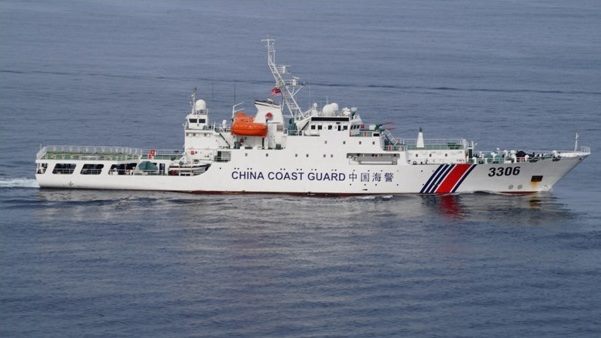
A China Coast Guard vessel and a Philippine government ship made contact near Sabina Shoal in the Spratly Islands on the morning of Sept. 18. Beijing said the Philippine ship changed course and accelerated into its path; Manila said the Chinese vessel struck its ship during a resupply run. No injuries were reported.
The China Coast Guard said on Sept. 18 that its cutter Sanzhou'ao made contact with Philippine vessel 3015 while conducting law enforcement near Sabina Shoal. In its account, the Philippine ship ignored repeated warnings, altered course and then suddenly accelerated across the cutter's bow.
광고 문의 · 300×250The Philippine Coast Guard described the same event differently, saying a Chinese coast guard vessel struck a Philippine government ship on a resupply mission, damaging part of its structure without injuring anyone.
Chinese foreign ministry spokesman Guo Jiakun said at a regular briefing that the Philippines should immediately halt infringement and provocation at sea and stop spreading accounts at odds with the facts. China would continue to defend its territorial sovereignty and maritime rights and preserve peace and stability in the South China Sea, he added.
A recurring pattern
Similar encounters have repeated near Sabina Shoal in recent years. Each side characterizes its own law enforcement or resupply activity as legitimate and the other's navigation as dangerous. Facts are reconstructed from footage and track data each government releases, and independent third-party verification is limited.
The legal dispute divides over the 2016 arbitral award and its interpretation and over effective administration. Manila cites the award in asserting activity within its exclusive economic zone, while Beijing maintains that it does not recognize the award's validity.
What reaches the region
The South China Sea is a main corridor for East Asian shipping. Energy import routes for Korea, Taiwan and Japan pass through it, so the frequency of such contacts alone affects marine insurance and route planning. That is the practical reason liaison channels to keep incidents from escalating matter.
This paper presents both accounts side by side. Quoting only one side where the facts conflict is selection rather than reporting, and our practice is to leave readers the material to judge.