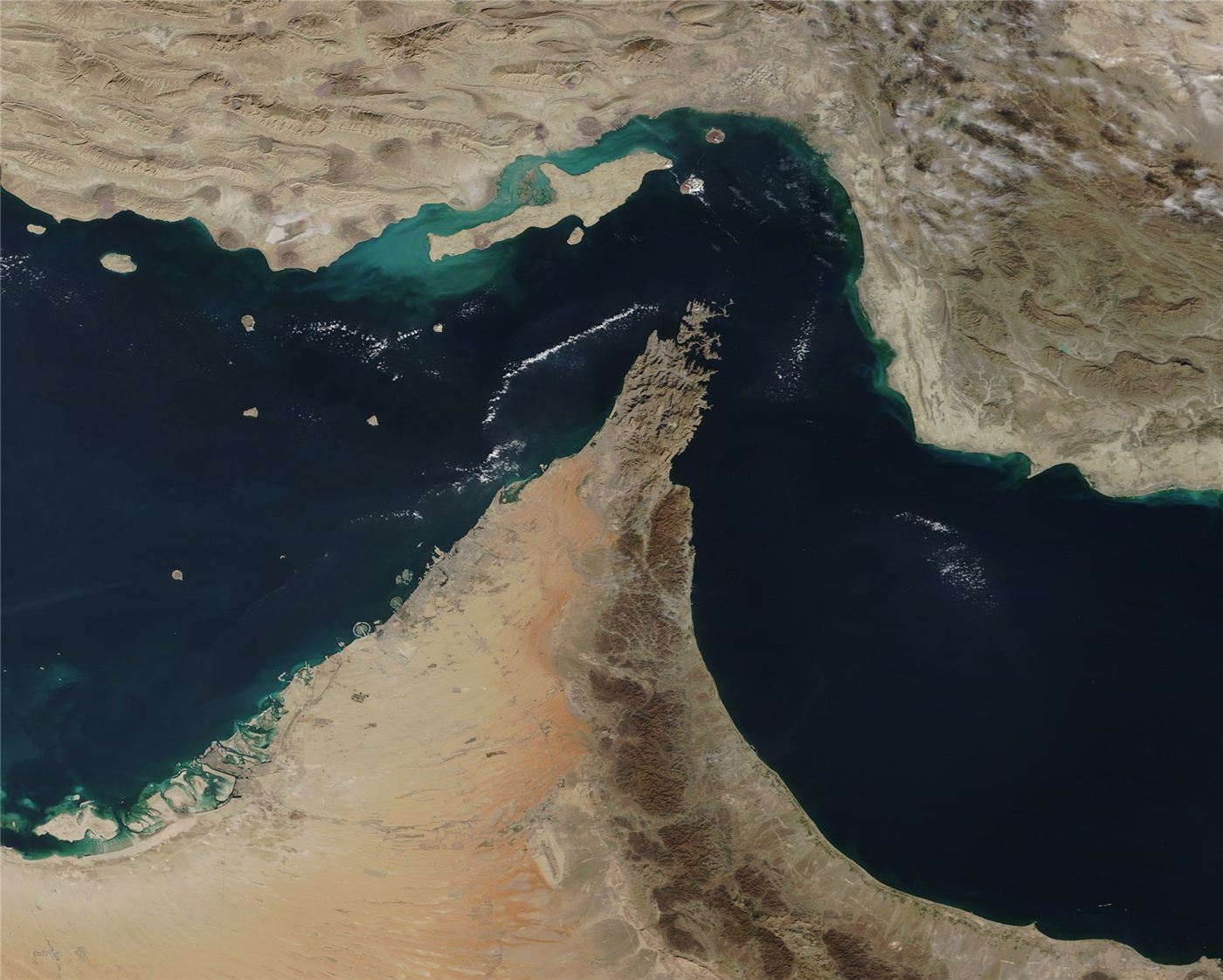
Iran's foreign ministry spokesman posted in Korean on social media on the 7th, local time, saying that a military presence or participation in operations in the Persian Gulf and the Strait of Hormuz could only be regarded as direct support for a party to an act of aggression. Seoul's foreign ministry said it was in close contact with concerned states and the international community over freedom of navigation in the strait.
Esmaeil Baghaei, spokesman for Iran's foreign ministry, posted a message in Korean on X on the 7th, local time, publicly warning the South Korean government, which is reported to be weighing a deployment to the Strait of Hormuz.
광고 문의 · 300×250Baghaei wrote that for another country to station forces or take part in operations in the Persian Gulf and the Strait of Hormuz 'cannot but be regarded as direct support for a party to an act of aggression.' The post also carried wording to the effect that dangerous choices carry a price.
It is unusual for the Iranian government to issue a message directly in Korean. Ministry spokesmen normally speak in Persian, English and Arabic, and posting in another country's national language is read as an attempt to name the intended recipient unmistakably.
The scope of the warning
Middle East Eye reported the previous day, citing Mohammad Marandi of the University of Tehran, a former media adviser to Iran's negotiating team, that if South Korea deployed to Hormuz, 'Iran would regard South Korea as an enemy and could strike Korean economic and military assets across the Gulf.'
That, however, was an academic speaking in a personal capacity rather than a government position. The spokesman's post named no specific facility or asset. Hence the argument that the form of the warning and the identity of the speaker should be read separately.
Across the Gulf lie a number of plants built with the involvement of Korean construction and shipbuilding firms, and ports used by Korean-flagged vessels. The Korean resident and expatriate population in the region is not small, and safety management has become a practical task.
Seoul's response
South Korea's foreign ministry said it was communicating closely with concerned states and the international community for peace and stability in the Middle East and for the free passage of all vessels through the Strait of Hormuz. The government says it is exchanging views with concerned countries, Iran included, and managing the situation.
Inside and outside government, observers suggest a form of 'distant support' similar to the 2019 Cheonghae unit deployment is under consideration: moving the unit stationed in the Gulf of Aden closer to Hormuz without folding it into a multinational operation.
Whether such an arrangement actually stays clear of the 'presence' and 'participation in operations' that Iran objects to is a separate question. In those waters physical distance and legal status do not necessarily align, and cases in which a problem of perception becomes a problem of risk have recurred.
Crude and the sea lane
The Strait of Hormuz carries a substantial share of the world's seaborne crude, and Middle Eastern grades still account for a high proportion of South Korea's imports. A recent government statement that domestic supply of Middle Eastern crude had entered a phase of recovery is tied directly to conditions along this route.
Yet the recovery itself is cited both as grounds for a deployment and, conversely, as grounds for saying the deployment is less urgent. The same figure is now being used to argue opposite cases.
A third view: the language of the sentence is the message
This paper considers the form of the warning more notable than its content. Iran's choice of Korean means a judgement was made to address not only the country's policymakers but its public. When a diplomatic message takes another country's citizens as its direct audience, the effect is usually harder to predict than through government channels.
Three things are worth watching: how Seoul defines the legal character of any dispatch; whether Iran takes formal steps beyond a spokesman's remarks; and how far security arrangements for Korean corporate assets along the Gulf are adjusted. None will be settled within days, but the direction is likely to emerge this week.