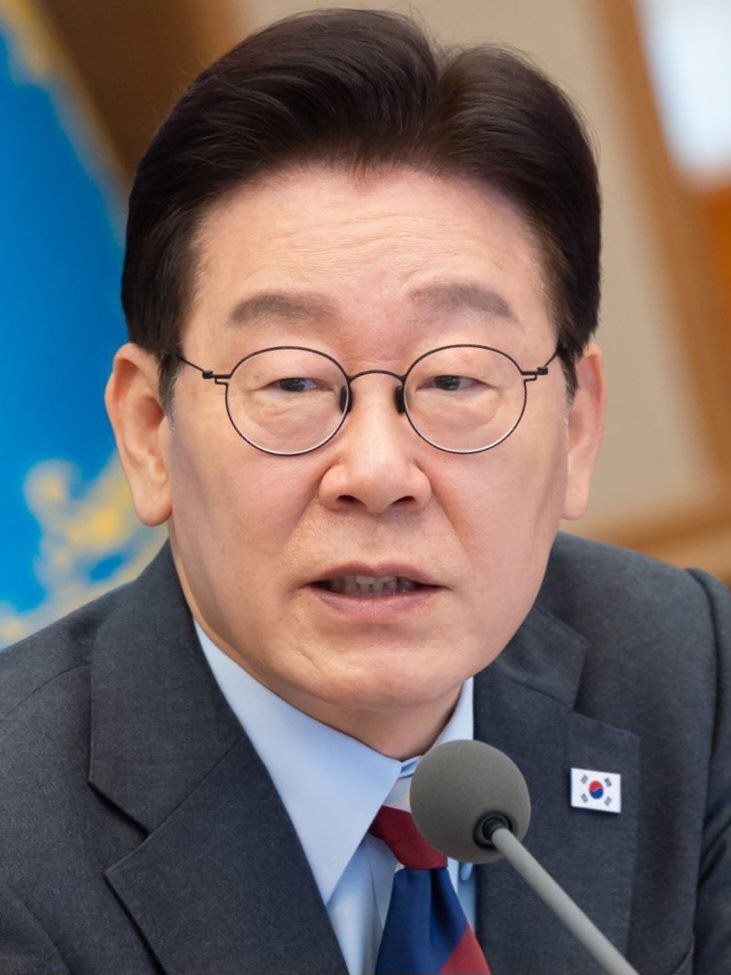
On the sidelines of the G7 summit in Évian, France, President Lee Jae-myung directly urged Donald Trump to lead a peaceful resolution of the North Korea nuclear issue, and Trump signaled willingness. Korea's Chinese-diaspora community is watching closely, with peninsula stability directly tied to their livelihoods.
On June 16, on the sidelines of the G7 summit in Évian, France, President Lee Jae-myung held a roughly 30-second exchange with U.S. President Donald Trump during the leaders' welcome ceremony. When Trump asked about the state of inter-Korean relations, Lee asked Trump to lead a peaceful resolution of the North Korea issue in the same way Trump had engaged in the Middle East conflict. Trump responded, 'I'll try.' The two leaders were then seated side by side at the official dinner, where they exchanged views on the Korean peninsula and other shared concerns, according to NewsPim and Herald Korea.
광고 문의 · 300×250The G7 stage and the context of Korea-U.S. diplomacy
This G7, co-chaired by Canada and France, addressed Ukraine, the Middle East, and trade. President Lee attended as an invited non-member, pushing to keep the Korean peninsula denuclearization agenda on the international stage. Analysts say Lee's direct request to Trump reflects the governing stance of the Lee administration on North Korea policy.
Lee's use of the phrase 'like the Middle East' was widely read as an appeal to Trump's self-styled role in Iran nuclear negotiations and Israel-Palestinian mediation, designed to encourage more active U.S. engagement in restarting dialogue with Pyongyang.
Trump's positive response in the brief exchange has drawn attention from some experts as a possible signal of future Korea-U.S.-North Korea dialogue. Neither side mentioned a specific negotiating roadmap or timeline.
Trump's 'carrot-and-stick' diplomacy and the North Korea nuclear variable
The Trump administration's negotiating style—pairing pressure with incentives—is often called a 'carrot-and-stick' approach. On North Korea, maintaining sanctions while pursuing dialogue is seen as a live option; the core variable is how to define and bring North Korea's nuclear and missile programs to the table. Seoul is understood to be evaluating a flexible approach that accepts phased progress while holding to the goal of full denuclearization.
North Korea has not responded to formal dialogue channels, and no concrete path for bringing Pyongyang to the table has been disclosed. Many inside and outside the Korean government believe the key will be whether the U.S. makes the first proactive contact.
Lee also expressed hope for Middle East stability and the reopening of shipping through the Strait of Hormuz—read as a diplomatic signal aimed at stabilizing an energy-import-dependent Korean economy.
What it means for Korea's Chinese-diaspora community
Geopolitical stability on the Korean peninsula matters directly to the Chinese-diaspora community in Korea. Ethnic Chinese and overseas-Chinese families living in Korea find their businesses, children's schooling, and daily environment all tied to peninsula developments. Every time inter-Korean tensions spike, the won and financial markets shake, and some firms revisit supply-chain and logistics plans. Should the prospect of a peaceful resolution of the North Korea nuclear issue open up, the community's foundations would become more secure.
Diaspora community leaders generally refrain from political commentary, but are understood to hope broadly that peninsula peace, if achieved, would meaningfully improve the business climate and quality of life for Korea's Chinese community.
A third perspective
Korean media have largely covered the Lee-Trump exchange in positive terms, but diplomatic experts caution that the symbolic value of a 30-second conversation must be distinguished from actual policy change. Within the U.S., hard-line and moderate positions on North Korea coexist, and multiple rounds of working-level consultations would be needed before any Trump statement becomes official policy. Sinophone Bridge Times will continue to track what follow-on actions, if any, emerge from this contact, without leaning toward either side's hopes or fears.