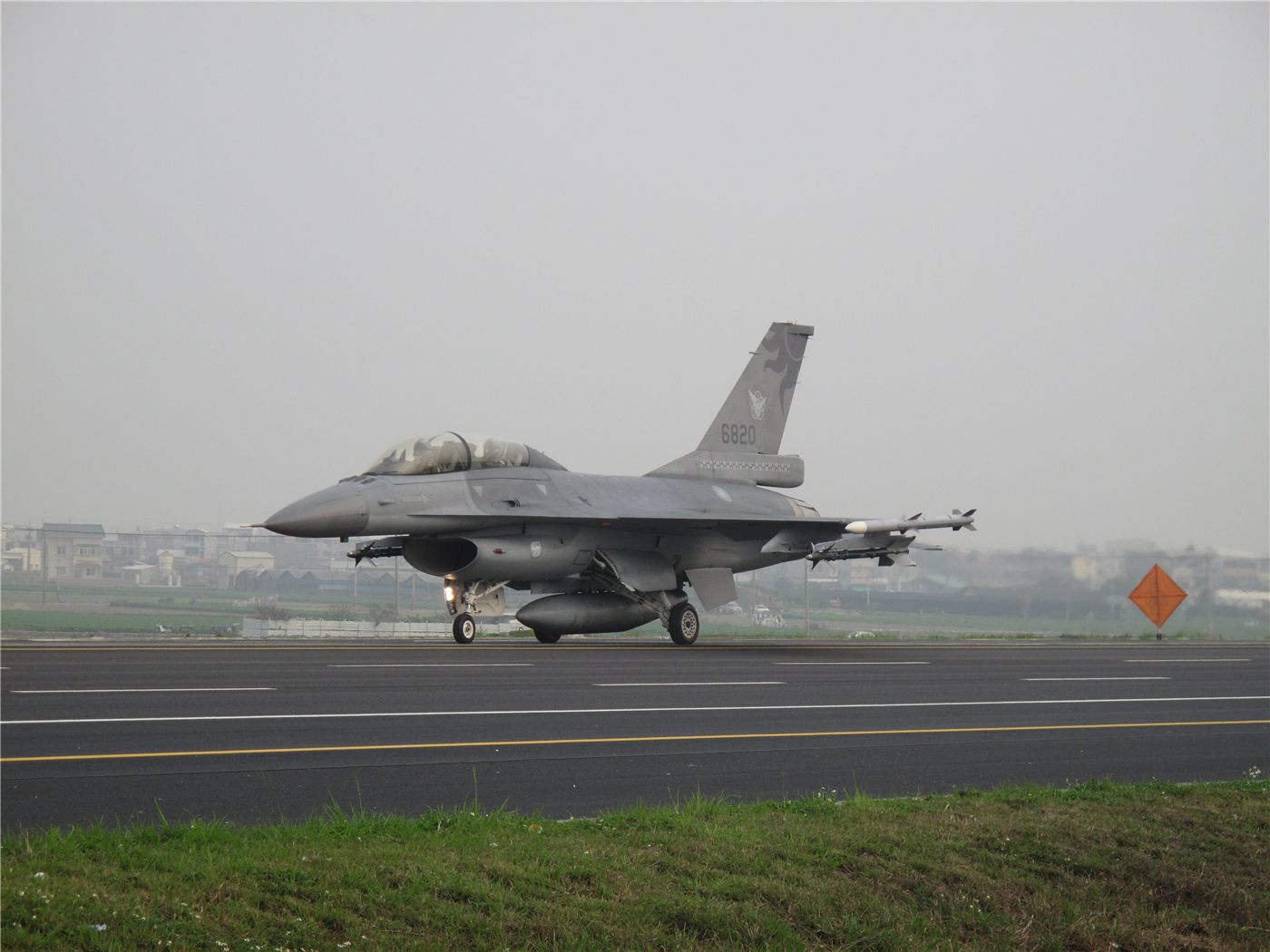
A two-seat F-16V Block 70 that left Lockheed Martin's Greenville plant has appeared at a naval air base near Fort Worth, Texas. Bearing tail number 6831 and fitted with conformal fuel tanks, the jet appears to be in final preparation before delivery to Taiwan, turning a 66-aircraft order from paper into reality.
The first of the new-build F-16V Block 70 fighters that Taiwan's air force is acquiring from the United States has been spotted over Texas, the Taipei Times reported on June 16.
광고 문의 · 300×250According to the report, a two-seat F-16V Block 70 bearing tail number 6831 flew from Lockheed Martin's production facility in Greenville, South Carolina, to Naval Air Station Joint Reserve Base Fort Worth in Texas. Aviation enthusiasts photographed the flight and shared the images on social media, revealing the aircraft's movements.
The jet was fitted with conformal fuel tanks, a luggage pod and three external fuel tanks. Conformal tanks hug the upper fuselage and carry roughly 450 additional gallons of fuel, extending the operational radius without sharply increasing drag. Configured for a long ferry flight, it is read as final preparation ahead of transfer to Taiwan.
A 66-jet program, from 2019 approval to first delivery
Taiwan's purchase of 66 new-build F-16V Block 70 jets from the US was approved in 2019, aimed at replacing aging aircraft and strengthening long-range strike and air-defense capabilities to bolster deterrence. Production problems at Lockheed Martin, however, have pushed delivery back several times, beyond the original target.
Taiwan's defense ministry had previously said a first delivery was 'possible' in September this year. The sighting in Texas is seen as the first concrete signal that the timeline is materializing. That the first jet is a two-seater also drew attention, as such aircraft are typically used by an instructor and pilot together for type-conversion training.
What changes
The F-16V Block 70 carries an active electronically scanned array (AESA) radar, an upgraded mission computer and electronic-warfare systems, markedly improving detection and engagement over older variants. Taiwan's air force has also been upgrading its existing F-16A/B fleet to Block 70 standard; with the 66 new jets added, the generational turnover of its overall F-16 force advances further.
Amid continuing military tension across the Taiwan Strait, air-force modernization is regarded as a core pillar of the island's security policy. Yet the program also faces US supply-chain delays and the challenge of building maintenance and parts-supply systems after delivery.
Analysts say the first jet's appearance carries considerable symbolic weight, because a procurement that lingered for years as a paper contract has now become an actual aircraft in flight. Still, full delivery and deployment of all 66 jets will take more time, and pilots must be trained and logistics support established before the capability is complete.
Taiwan has not officially confirmed the delivery schedule or details, and Lockheed Martin does not separately announce flights of individual airframes. Even so, the aircraft's appearance at the Texas base is treated as the most concrete sign yet that delivery is near.
A third perspective
The flight of a single fighter is, in itself, a small event, yet it condenses a seven-year contract, repeated delays, and a shifting regional security environment. Arms acquisition always carries a gap between 'when it arrives' and 'what it can do once it arrives.' For Sinophone readers in Korea, this news is more than a weapons deal; it should be read alongside the wider arms dynamics and supply-chain realities of East Asia. The arrival of one aircraft type does not by itself guarantee stability, and military balance is always relative and in flux.