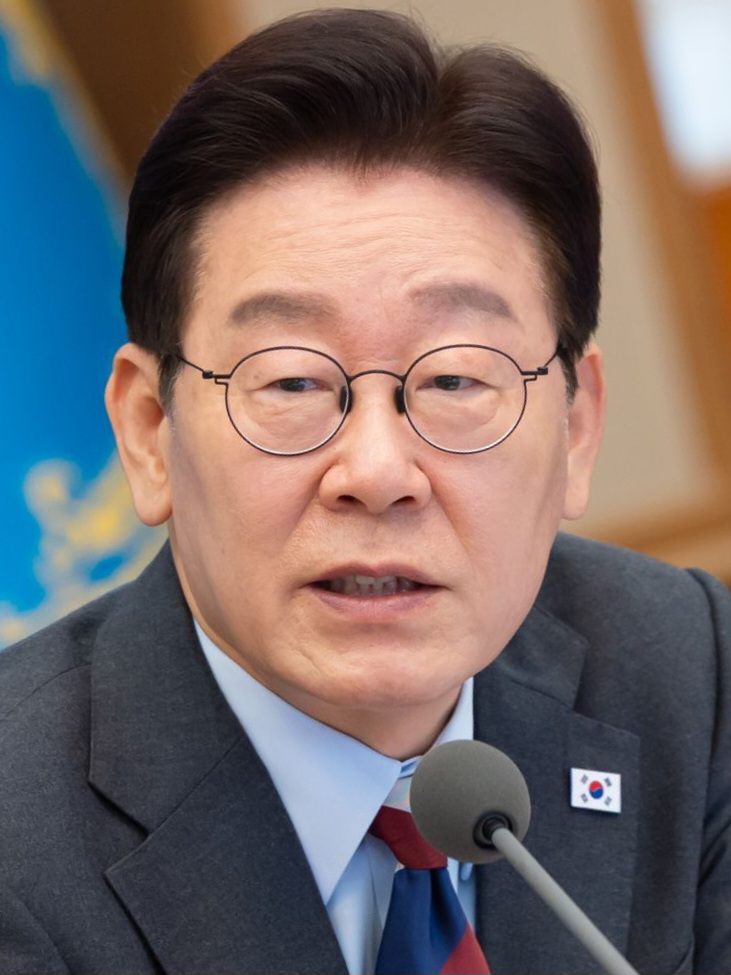
President Lee Jae-myung welcomed the US–Iran agreement that effectively ends a 106-day confrontation, praising President Trump's leadership. He made clear he hopes Korean ships and crews transiting the Strait of Hormuz can safely resume sailing soon.
President Lee Jae-myung welcomed the conclusion of Middle East negotiations between the United States and Iran on June 16, calling it 'an important step toward the resolution the international community has long awaited,' the Kyunghyang Shinmun reported. On his X account the president wrote that he 'welcomes the conclusion of the Middle East negotiations,' adding that he highly values the leadership of US President Donald Trump and the diplomatic efforts of the parties and stakeholders that brought the deal about.
광고 문의 · 300×250The agreement is read as a sign that the roughly three-and-a-half-month, 106-day armed clash between the US and Iran — which shook the world economy and energy markets — has at last entered a calming phase. Seoul hopes that with tensions easing in the oil-rich region, global crude prices and supply chains will stabilize.
The president pointed specifically to energy security. He said he hopes 'global energy supply and demand will stabilize and that all vessels, including our ships and crews that have faced restrictions transiting the Strait of Hormuz, can safely resume sailing as soon as possible.' The strait is a chokepoint through which a large share of Korea's imported crude passes, so whether traffic normalizes bears directly on domestic prices.
What Korea gains, and what it will not risk
The biggest reason the government welcomes the truce is energy cost. Crude import bills jumped sharply year-on-year last month and unit prices surged; falling oil prices could ease both the trade balance and consumer inflation. Lee's pledge that Korea, 'as a responsible member of the international community,' will spare no support or cooperation is not unrelated to that bottom line.
Yet caution is audible around the presidential office. It will take time for the deal to be finalized on paper and for concrete safety steps — such as mine clearance inside the strait — to be carried out. Officials agree the real question is 'when the strait actually reopens.'
Why single out Trump's leadership
Lee's direct praise of Trump's leadership reads as a diplomatic message. With pending US issues such as defense cost-sharing and tariff talks, publicly crediting the Middle East outcome is seen as useful for managing the alliance, analysts say.
At the same time, having just wrapped a Europe tour while stressing peninsular peace, Lee's positive read of a diplomatic solution in the Middle East aligns with his own dialogue-and-negotiation line. Some see an implicit message: a model of settling conflict through talks rather than force that he would like to apply to the Korean Peninsula.
What it means for Korea's Chinese community
Stable oil and logistics flowing from the Middle East are a tangible change for Chinese small-business owners and students in Korea. Cheaper fuel and freight ease pressure on food and daily-goods prices, and a steadier exchange rate lightens remittances and tuition. For ethnic-Chinese traders, normalized ocean freight means recovering margins.
Conversely, if the deal falters and strait tensions flare again, the shock lands first on foreign households. Currency swings and rising prices weigh more heavily on migrants with thinner income bases. The Bridge Times will keep watching whether the deal takes hold, measured against the everyday prices our readers pay.
A third perspective
The Bridge Times views this welcome on three levels. First is the pragmatic lens of energy and prices — the direct benefit a ceasefire brings Korea's economy. Second is the diplomatic lens of alliance management — the strategic weight of praising Trump's leadership. Third is the normative lens of resolving conflict through negotiation — the message Lee would extend to the peninsula. We lean toward neither side's hopes nor its doubts, but set the facts side by side so our Chinese readers in Korea can judge for themselves.